Do You Need a Crib Mattress Protector?

Content:
- 1. Do you really need a waterproof mattress protector for a crib?
- 2. Are waterproof mattress protectors safe for babies?
- 3. What is the difference between a mattress protector and a fitted sheet?
- 4. Why does the material of a crib mattress protector matter for babies?
- 5. What is bamboo viscose and why is it used in baby products?
- 6. What does Oeko-Tex certified mean, and why does it matter for baby products?
- 7. Can a waterproof mattress protector be breathable?
- 8. How do you wash a bamboo crib mattress protector?
- 9. How many crib mattress protectors do you need?
- 10. What to look for in a crib mattress protector
- 11. Frequently Asked Questions
- 11.1. Do I need a crib mattress protector if I already use a fitted sheet?
- 11.2. What is the safest mattress protector for a newborn?
- 11.3. Is bamboo safe for babies?
- 11.4. How do I know if a crib mattress protector fits my mattress?
- 11.5. Can I use a mattress protector from day one?
- 11.6. Does a mattress protector change how firm the mattress feels?
- 11.7. How long does a crib mattress protector last?
- 11.8. What is the difference between a mattress pad and a mattress protector?
- 11.9. Are waterproof mattress protectors safe for babies?
- 11.10. Are crib mattress pads safe?
- 11.11. How many crib mattress protectors do I need?
Yes, you need a waterproof mattress protector for your baby’s crib.
Crib mattresses cannot be washed. One diaper blowout, one night of spit-up, one episode of night sweating is all it takes to permanently stain or damage the mattress underneath. A mattress protector catches what the fitted sheet cannot and keeps the surface your baby sleeps on clean, dry, and safe.
The material matters too. Not all protectors are the same. Thick plastic layers trap heat. Thin polyester covers feel nothing like the soft sheets beside them. Bamboo protectors breathe, feel soft against skin, and can carry certifications that confirm they are free from harmful substances.
Here is what every new parent should know before choosing one.
Do you really need a waterproof mattress protector for a crib?
Yes. Even with a fitted sheet in place, liquid reaches the mattress. Crib mattresses are designed for firmness, not washability, and most cannot be cleaned once soaked through. Mold and bacteria can develop inside a wet mattress even when the surface looks dry.
A waterproof protector creates a washable layer between the sheet and the mattress. When something leaks through, the protector catches it. You pull it off, toss it in the wash, and put a clean one back.
For new parents doing middle-of-the-night sheet changes, having two protectors on rotation is one of the most practical decisions you can make before the baby arrives.
Are waterproof mattress protectors safe for babies?
A thin, fitted waterproof protector that goes under the crib sheet is safe to use. What matters is that the sleep surface stays exactly the way safe sleep guidelines describe it: firm, flat, and covered by a fitted sheet only.
The American Academy of Pediatrics gives parents a simple test for firmness: the mattress should not indent when your baby is lying on it. A protector passes that test when it is thin, fits snugly with elastic all the way around, and adds no padding. Put your hand flat on the mattress with the protector and sheet on. If it feels the same as the bare mattress, you are good.
What is not safe is anything that makes the surface softer. The AAP lists mattress toppers among the things to keep out of the crib, along with blankets, toys and bumper pads. Some products sold as “crib pads” are really thick, quilted toppers. Those are the ones to skip.
Three quick checks before you buy:
- Thin, not cushioned. It should protect the mattress, not change how it feels.
- Fitted on all four sides. Deep elastic edges keep it from shifting or bunching under the sheet.
- One layer only. One protector under one fitted sheet. No stacking.
Are crib mattress pads safe?
It depends on what the pad is. “Mattress pad” and “mattress protector” get used for the same thing in crib bedding, but some pads are thick and quilted, built to add softness. For a crib, softness is the problem. A pad that is thin, waterproof and fitted works the same as a protector and keeps the mattress firm. A pad that is plush or puffy works like a topper and does not belong in a crib.
If the product photo shows a thick, pillowy top, or the description talks about “extra comfort” or “cushioning,” treat it as a topper.
What is the difference between a mattress protector and a fitted sheet?
A fitted sheet covers the sleeping surface but is not waterproof. Liquid soaks through a sheet into the mattress below.
A mattress protector sits between the sheet and the mattress. It has a waterproof backing that stops liquid from reaching the mattress, while the top surface stays soft and breathable for your baby.
Some parents use both together: a mattress protector under the fitted sheet. That is the standard setup, and it is exactly what the protector is designed for.
Why does the material of a crib mattress protector matter for babies?
Babies sleep up to 17 hours a day in the first months of life. That is a lot of time in direct contact with whatever their sleep surface is made from.
Materials that trap heat can make your baby too warm. Materials that off-gas chemicals add something to the air your baby breathes. Materials that feel stiff or scratchy wake babies who would otherwise stay asleep.
Bamboo viscose has become a common choice for baby sleep products because it is:
- Softer than conventional cotton
- Breathable and temperature-regulating
- Less likely to trap heat than polyester
- Available with third-party safety certifications
That last point matters more than it might seem at first.
What is bamboo viscose and why is it used in baby products?
Bamboo viscose, also called viscose from bamboo, is a fabric made from bamboo pulp. The plant grows quickly without pesticides, and the resulting fiber is soft, breathable, and absorbent.
For baby products, bamboo viscose is used because the fabric is gentle on sensitive skin and regulates temperature naturally. It does not hold heat the way synthetic fibers do, and it moves with the baby rather than against them.
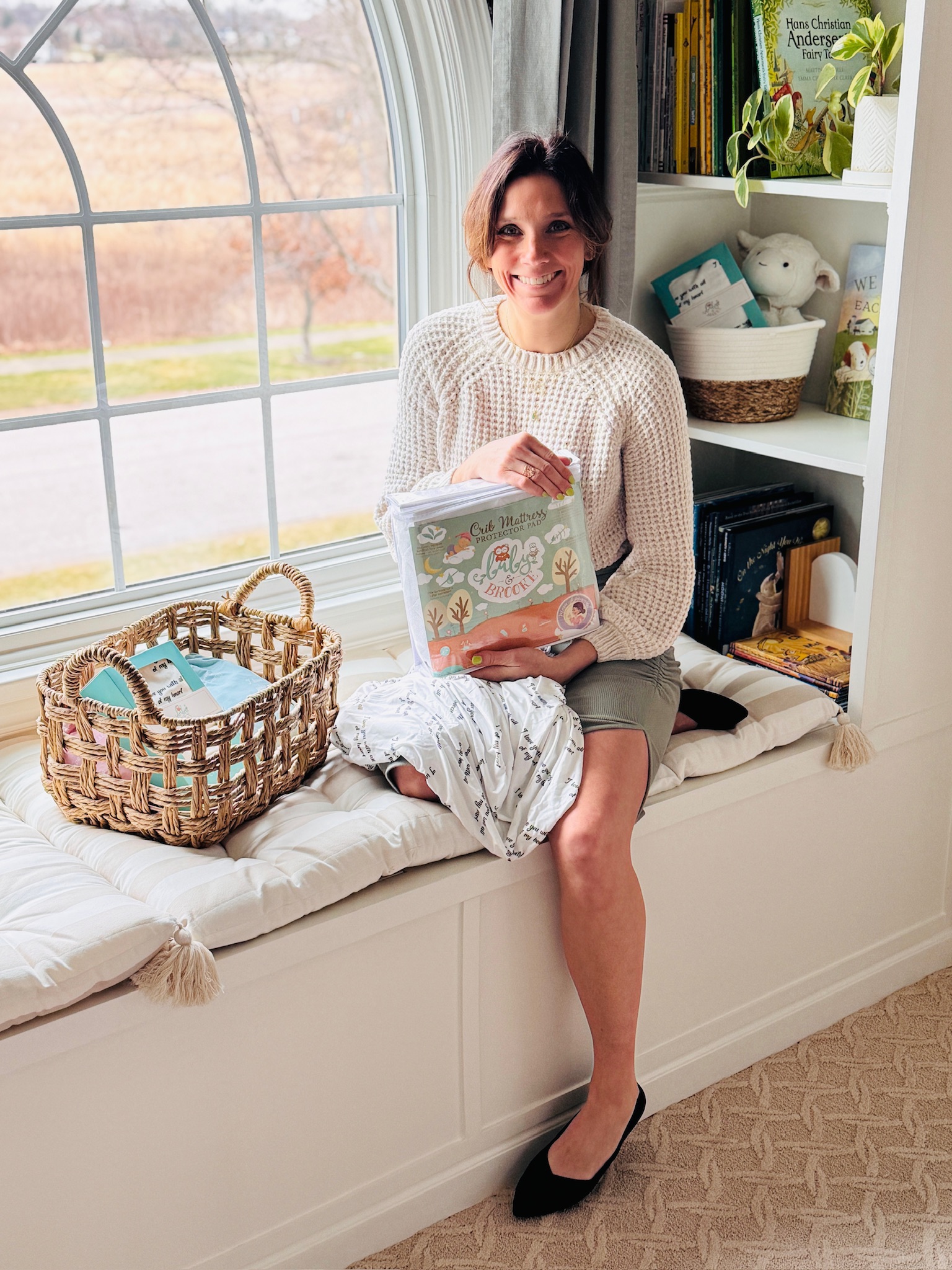
The Baby and Brooke Waterproof Crib Mattress Pad uses bamboo viscose for the same reason our crib sheets do. The touch is consistent across both, so there is no difference in texture when the sheet rests on top of the protector.
What does Oeko-Tex certified mean, and why does it matter for baby products?
Oeko-Tex Standard 100 is a third-party certification that tests textile products for harmful substances, including heavy metals, pesticides, and formaldehyde. A product with this certification has been tested and verified clean at every stage of production: the thread, the dye, the finished fabric.
For baby products, this matters because infants are in close contact with fabric for most of the day, and their skin and immune systems are still developing.
The Baby and Brooke Waterproof Crib Mattress Pad is Oeko-Tex Standard 100 certified. It also meets CPSIA compliance requirements, verified through third-party testing (report ELE2503C03121, March 2025): flammability Class 1, lead not detected, phthalates not detected. All tests passed.
A certification does not change how the product feels. It tells you what is not in it.
Can a waterproof mattress protector be breathable?
Yes, if the backing is designed for it.
Older mattress protectors used a solid vinyl or PVC layer that blocked water but also blocked air. That kind of protector gets warm and makes noise when the baby moves.
Modern waterproof pads use a laminate membrane that stops liquid while still allowing some airflow. Combined with a breathable top layer like bamboo viscose, the result is a protector that is waterproof without trapping heat.
If breathability is a priority, look for:
- Bamboo or cotton on the top surface (not polyester)
- A breathable membrane backing (not solid vinyl or PVC)
- No mention of plastic materials in the fabric description
How do you wash a bamboo crib mattress protector?
Machine wash cold with a gentle detergent. Tumble dry on low or hang to dry.
High heat damages bamboo fibers and can degrade the waterproof backing over time. Avoid bleach, fabric softener, and anything with optical brighteners.
For a middle-of-the-night change, having a second protector ready means you can put a clean one on immediately and deal with washing in the morning.
How many crib mattress protectors do you need?
You need two crib mattress protectors: one on the crib and one clean and ready to go.
One on the crib, one in the wash or ready to go. Leaks do not wait for a convenient time, and having to wait for a single protector to dry before the next nap is a situation you want to avoid at 2 a.m.
If your baby is going through a phase of frequent blowouts, three gives you more flexibility.
What to look for in a crib mattress protector
There are a few things worth checking before you buy:
Material. The top layer is what your baby sleeps against (under the sheet). Bamboo and cotton breathe better than polyester. The backing should be a waterproof membrane, not solid plastic.
Certifications. Oeko-Tex Standard 100 and CPSIA compliance are the two most relevant for baby products in the United States. Both require third-party testing.
Fit. Standard crib mattresses in the US are 52 inches by 28 inches. A protector with elastic all around the edge stays in place better than a loose cover. Our Waterproof Crib Mattress Pad is made for standard 52 by 28 inch crib mattresses.
Washability. It will be washed often. Check the care instructions before you buy, not after the first leak.
You can read more about what Jamie looks for in the products she designs on the Baby and Brooke About page.
Frequently Asked Questions
Do I need a crib mattress protector if I already use a fitted sheet?
Yes. Fitted sheets are not waterproof. Liquid passes through a sheet into the mattress below. A waterproof protector is what keeps the mattress itself clean and dry.
What is the safest mattress protector for a newborn?
Look for one that is Oeko-Tex certified and CPSIA compliant. These certifications mean the product has been tested and verified free from harmful substances. Avoid protectors with PVC or vinyl backing, which do not breathe.
Is bamboo safe for babies?
Bamboo viscose is a soft, breathable fabric used widely in baby products. When certified to Oeko-Tex Standard 100, it has been tested and verified free from harmful chemicals at every stage of production.
How do I know if a crib mattress protector fits my mattress?
Standard US crib mattresses are 52 by 28 inches. Look for a protector labeled for a standard crib mattress, with elastic all around the edge to keep it secure.
Can I use a mattress protector from day one?
Yes. A waterproof mattress protector is appropriate for newborns. It sits under the fitted sheet and does not affect the firmness of the sleep surface.
Does a mattress protector change how firm the mattress feels?
A thin, fitted protector does not meaningfully change the feel of the mattress. The mattress stays firm, which is what infant sleep safety guidelines recommend.
How long does a crib mattress protector last?
With proper care, a good mattress protector lasts through the crib years. Wash on cold, dry on low, and check the waterproof backing periodically. If the backing starts to delaminate or leaks through, replace it.
What is the difference between a mattress pad and a mattress protector?
The terms are often used interchangeably for crib products. In the adult bedding world, a mattress pad sometimes adds cushioning while a protector focuses on protection. For cribs, where firmness is a safety requirement, the focus is always on protection: a waterproof layer that is washable and does not soften the mattress.
Are waterproof mattress protectors safe for babies?
Yes, when the protector is thin, fits snugly and goes under the fitted sheet without adding padding. The mattress should still be firm and flat and should not indent when your baby lies on it. Skip anything thick or quilted, which works like a mattress topper.
Are crib mattress pads safe?
A thin, waterproof, fitted pad is safe and works like a mattress protector. A thick or quilted pad that makes the mattress softer is not safe for a crib, because infant sleep surfaces need to stay firm and flat.
How many crib mattress protectors do I need?
Two. One stays on the crib and the other is clean and ready, so a middle-of-the-night leak never leaves you waiting on the dryer. If your baby is going through a phase of frequent blowouts, a third one helps.
There are a lot of decisions that come with getting the nursery ready. A waterproof mattress protector is one of the quieter ones. It is not a statement piece, not something that shows in a photo. It just works, wash after wash, so the mattress underneath stays clean for as long as your baby needs it.
The Baby and Brooke Waterproof Crib Mattress Pad is bamboo viscose, Oeko-Tex certified, and made to pair with the bamboo crib sheets your baby already loves.
Made with love.
Tags